
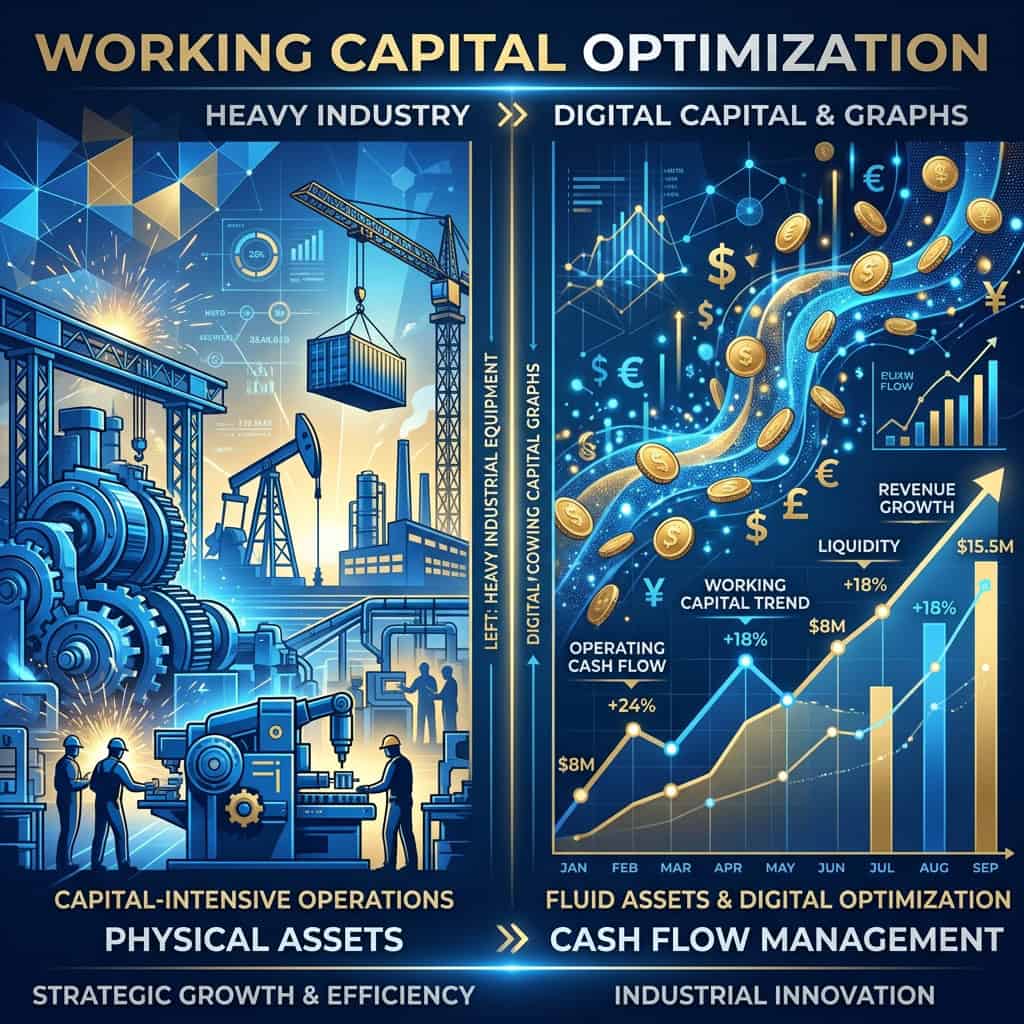
Navigating Corporate Debt: A Strategic Imperative
For midsize companies experiencing rapid growth, the need for external capital is inevitable. However, utilizing the wrong type of debt can cripple a company’s cash flow and stifle long-term expansion. One of the most critical decisions CFOs face is choosing between equipment financing vs working capital loan midsize company structures. While both provide necessary liquidity, they serve fundamentally different operational purposes and carry vastly different risk profiles.
This comprehensive financial analysis will dissect the mechanics of both instruments, explore the tax implications, and provide a strategic framework for midsize enterprises to optimize their capital stack without over-leveraging their balance sheets.
Deconstructing Equipment Financing
Equipment financing is a highly specific, asset-backed lending product. Whether a midsize manufacturing firm needs to purchase a $500,000 CNC machine, or a logistics company needs to expand its fleet of semi-trucks, equipment financing is the tool of choice. The defining characteristic of this loan is that the equipment itself serves as the collateral.
Because the lender has a hard, tangible asset to repossess and liquidate in the event of default, the risk is significantly lower than an unsecured loan. Consequently, equipment financing generally offers highly favorable terms: longer repayment periods (often matching the useful life of the asset, typically 5 to 10 years) and lower interest rates. Furthermore, Section 179 of the IRS tax code often allows midsize companies to deduct the full purchase price of financed equipment in the first year, providing a massive, immediate tax shield.
The Mechanics of Working Capital Loans
In the debate of equipment financing vs working capital loan midsize company, the latter represents liquidity for daily operations rather than hard assets. A working capital loan is designed to bridge short-term gaps in cash flow. This capital is used to meet payroll, purchase inventory ahead of a busy season, or fund a massive digital marketing campaign. It is the lifeblood of operational agility.
Working capital loans can be structured as term loans or revolving lines of credit. Because they are often unsecured (or secured only by a blanket lien on accounts receivable), they carry a higher risk for the lender. As a result, working capital loans typically feature shorter repayment terms (12 to 36 months) and higher interest rates compared to equipment financing. They are not designed for long-term investments; they are designed for immediate, short-term deployment to generate rapid ROI.
Strategic Deployment: When to Use Which
The cardinal sin of corporate finance is using short-term debt to finance long-term assets. If you use a high-interest, 12-month working capital loan to buy a piece of heavy machinery that will take 5 years to generate a positive ROI, you will instantly create a severe cash flow crisis.
Conversely, using equipment financing frees up your existing cash to act as your working capital. This strategy of leveraging specific assets to protect liquidity is utilized across all industries. For instance, commercial developers frequently seek out concrete companies that offer financing near me to fund foundational work, preserving their working capital for agile marketing and interior design phases. Similarly, property managers will ask do siding companies offer financing to ensure CapEx improvements don’t drain their operational reserves.
Hybrid Solutions and Modern Fintech
Modern finance teams are increasingly utilizing fintech platforms that blend these concepts. Advanced corporate spend platforms provide high-limit corporate cards (a form of short-term working capital) integrated directly with accounting software to manage daily expenses seamlessly. To understand how these tools are revolutionizing midsize finance departments, review our deep dive into airbase fintech company finance as a service tools.
Frequently Asked Questions (FAQ)
Can I use an equipment loan to pay my staff?
Absolutely not. Equipment financing is strictly underwritten for the purchase of specific, tangible assets. The lender typically pays the equipment vendor directly. If you need funds for payroll, you require a working capital loan or an invoice factoring facility.
Does a working capital loan require a personal guarantee?
For midsize companies (typically $10M to $50M in revenue), traditional banks often still require a personal guarantee from the founders. However, specialized alternative lenders may waive this requirement in exchange for slightly higher rates, relying entirely on the company’s historical cash flow data.
Which loan is faster to secure?
Working capital loans, especially from modern fintech lenders utilizing API connections to your banking data, can often be approved and funded within 48 hours. Equipment financing takes slightly longer, as the lender must appraise the specific value and lifespan of the asset being purchased.
Conclusion: Optimizing the Capital Stack
Understanding the nuances of equipment financing vs working capital loan midsize company strategies is the hallmark of sophisticated financial leadership. By aligning the type of debt directly with its intended use—long-term debt for long-term assets, and short-term debt for operational agility—midsize companies can aggressively scale operations, maximize tax advantages, and maintain an impenetrable balance sheet.