
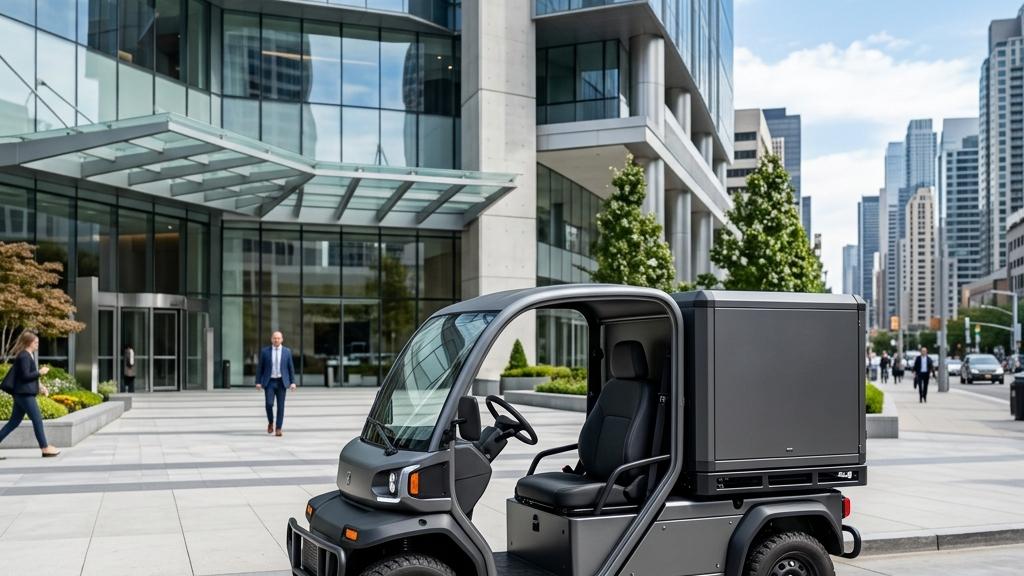
As massive corporate campuses and localized commercial logistics operations continue to expand, the demand for hyper-efficient, low-cost transportation solutions has fundamentally transformed enterprise mobility. A critical development in this sector is the aggressive deployment of Low-Speed Vehicles (LSVs), colloquially known as golf carts street legal modifications. While these highly stylized, electric utility vehicles offer massive operational efficiencies by reducing reliance on standard commercial trucks, they introduce an entirely new spectrum of severe corporate liability. Integrating these modified vehicles into a corporate fleet requires navigating a complex, highly fragmented labyrinth of municipal ordinances, state-level Department of Transportation (DOT) regulations, and highly aggressive tort exposure. If an enterprise deploys these vehicles on public roads intersecting their corporate campus without absolute regulatory validation, a single accident can instantly trigger multi-million dollar liability lawsuits that easily pierce standard corporate insurance veils. Consequently, elite corporate legal departments execute extreme compliance mapping before authorizing the deployment of these low-speed fleets.
The strategic deployment of LSVs is not an exercise in basic fleet management; it is a calculated negotiation with strict liability. The corporate legal team cannot simply rely on the manufacturer’s “street legal” designation; they must independently verify that every vehicle component, from specialized lighting arrays to DOT-approved windshields, perfectly aligns with the hyper-specific statutes of the local jurisdiction. This relentless focus on granular compliance is functionally identical to the risk mitigation strategies utilized in The Catastrophic Institutional Risk of Deploying Free Legal Forms; the corporation is refusing to accept generic, unverified solutions and is instead engineering a bespoke, impenetrable legal defense around its operational assets.
The mechanics of municipal compliance and fleet liability
To successfully integrate street legal golf carts into a commercial logistics network, the executive committee must orchestrate a flawless strategy of municipal validation and driver liability mitigation. The primary objective is to prove that the corporate fleet is fundamentally insulated from claims of regulatory negligence.
This requires the deployment of advanced legal analysts who systematically dismantle local traffic ordinances, algorithmically comparing the specific routing of the LSVs against highly restricted speed limit corridors. By mathematically proving that the corporate fleet only operates within legally authorized municipal zones and exceeds all required safety modifications, the corporate attorneys guarantee that their client’s massive financial investments are permanently shielded from catastrophic liability claims. This level of forensic validation is a critical requirement for maintaining corporate valuation in a hyper-regulated urban environment.
Integrating advanced technology into fleet risk modeling
While the core capability of an elite compliance attorney is their analytical rigor, modern commercial enterprises supercharge this capability through the massive integration of enterprise fleet management software. Tracking the real-time compliance status of a decentralized, low-speed fleet across multiple municipal jurisdictions requires military-grade digital architecture.
The following table illustrates the comparative strategic advantages of supporting a legal department with advanced enterprise fleet software versus relying on traditional, manual logistics tracking:
| Operational Domain | Traditional Manual Logistics | Advanced Enterprise Integration | Strategic Impact on the Corporation |
|---|---|---|---|
| Routing Compliance | Highly Vulnerable (Drivers frequently deviate into unauthorized traffic zones) | Absolute Control (Geofencing instantly disables vehicles attempting to enter restricted areas) | Instantly eradicates the risk of municipal fines and regulatory negligence claims |
| Driver Authentication | Extremely Difficult to verify specialized LSV licensing requirements | Maximum Velocity (Biometric or keycard verification tied directly to legal HR databases) | Guarantees that no unauthorized personnel can expose the corporation to liability |
| Maintenance Tracking | Relies entirely on slow, manual service reporting | Flawless execution utilizing automated, real-time diagnostic telemetry | Prevents the corporation from operating vehicles with legally compromised safety modifications |
| Institutional Memory | Relies entirely on fragmented local fleet managers | Utilizes systems like those detailed in Architecting Centralized Intelligence with Legal Document Management Software | Instantly deploys the firm’s entire history of highly effective operational protocols |
Establishing protocols for operational deployment
To maximize the devastating effectiveness of their centralized legal authority, the executive committee must enforce absolute operational discipline regarding how low-speed fleets are utilized within the corporate environment.
To ensure total protection against the liabilities of LSV deployment, managing partners must mandate the following strict execution protocols:
- Establish a total, uncompromising requirement that every street legal golf cart must pass a rigorous, algorithmic audit against specific municipal codes prior to integration into the corporate fleet.
- Mandate that all LSVs must be actively tracked exclusively through the firm’s proprietary, heavily encrypted fleet lifecycle management platform.
- Execute immediate, severe audits to guarantee that all corporate insurance policies are structured to explicitly cover the highly specific liabilities associated with low-speed commercial vehicles.
- Directly link the strict adherence to these fleet generation protocols to the compensation metrics of all senior logistics managers.
By managing this fundamental compliance architecture with absolute rigidity, a modern corporation guarantees its ability to navigate complex commercial logistics without exposing itself to massive, entirely avoidable legal vulnerabilities.